Comparing ABA Outcomes: Home Generalization vs. Clinic Skill Acquisition
Applied Behavior Analysis (ABA) is practiced across varied settings, each with distinct strengths. Parents, caregivers, and clinical teams often face a practical question: where will a child make the most meaningful progress—at home or in the clinic? A thoughtful therapy setting comparison considers not only the rate of learning in a structured therapy setting but also the durability and relevance of behavior generalization to everyday life. This article explores how in-home ABA therapy and clinic-based ABA services complement one another, what to expect from each, and how to align ABA service models with a child’s goals and family routines.
The https://aba-therapy-success-journeys-family-led-outcome-reviews.theglensecret.com/net-vs-structured-aba-matching-teaching-style-to-child-needs case for clinic-based skill acquisition Clinic-based ABA services typically operate within a structured therapy setting that allows for precise teaching conditions, consistent reinforcement schedules, and controlled exposure to stimuli. For learners who benefit from clear routines, minimal distractions, and high trial rates, clinics can accelerate early skill acquisition. This is particularly relevant for foundational skills—discrete trial training (DTT), early receptive and expressive language, imitation, matching-to-sample, and early academic behaviors—where instructional pacing and errorless learning procedures are crucial.
Clinics also offer specialized equipment and materials, peer models, and access to multiple clinicians. That ecosystem can facilitate systematic assessments, rapid program adjustments, and exposure to peer-mediated interventions. For children working on group readiness or classroom behaviors—like waiting, transitioning on a schedule, or responding to group instructions—clinic-based ABA services can provide a stepwise bridge to school settings.
However, skill acquisition at the clinic is not the only metric that matters. Without intentional programming for stimulus and response generalization, skills learned in a clinic may not transfer to the natural contingencies of daily life. This is where natural environment teaching (NET) and home-based autism therapy become essential.
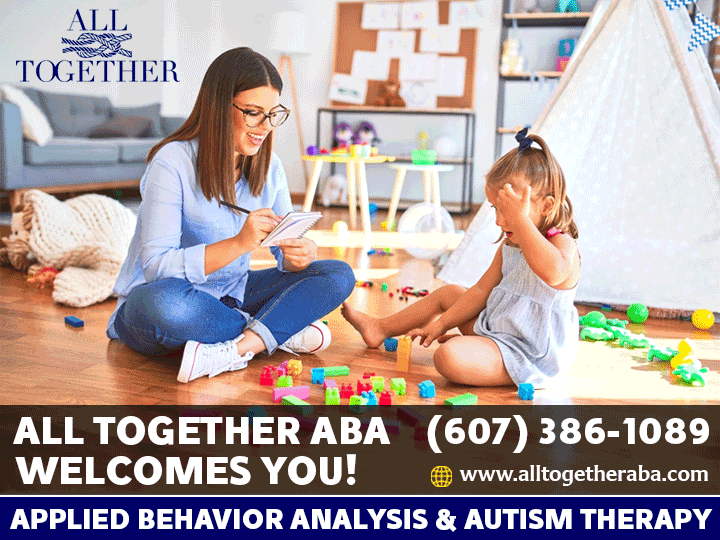
The power of in-home generalization In-home ABA therapy naturally embeds learning in the places and routines where children live: mealtimes, getting dressed, play with siblings, and community outings. Natural environment teaching (NET) in the home leverages the child’s motivation and real-life contexts to promote behavior generalization—responding appropriately across people, settings, and materials. For example, a child who learned to request items in a clinic may need practice requesting snacks in the kitchen, help from a sibling in the living room, or a preferred toy at grandma’s house.
In-home sessions also allow for high-impact caregiver coaching. Parent involvement ABA is a consistent predictor of maintenance and generalization. When caregivers implement prompting, reinforcement, and antecedent strategies across daily routines, children receive many more learning opportunities than the therapy hours alone. In-home ABA therapy is uniquely positioned to build caregiver fluency through live modeling, feedback, and collaborative problem-solving around genuine household challenges.

That said, home environments can introduce variability—noise, interruptions, or shifting routines—that may slow initial acquisition for some learners. Effective home-based autism therapy balances flexibility with structure, building discrete learning trials into NET and using visual supports and brief, focused teaching intervals to protect instructional integrity.
How to integrate both settings effectively The most robust ABA outcomes come from aligning the strengths of clinic-based ABA services with home-based generalization. Rather than an either-or decision, a therapy setting comparison should ask: which skills are best introduced in a structured therapy setting, and which should be shaped and reinforced through NET in the home and community?
A practical integration plan might include:
- Foundational skill teaching in the clinic: Prioritize targets that benefit from high repetition and precise prompting (e.g., receptive identification, tacting, listener responding by feature-function-class). Early generalization probes: As soon as a skill reaches criterion in the clinic, schedule home-based probes to assess stimulus and response generalization. Use multiple exemplars and novel materials. NET for functional relevance: Teach and practice daily living skills, communication for naturally occurring needs, compliance with family routines, and play and social skills with siblings during in-home ABA therapy. Parent involvement ABA as a core component: Incorporate structured caregiver training with specific goals (e.g., delivering differential reinforcement, implementing functional communication training, or using visual schedules). Data sharing and coordination: Ensure both ABA therapy locations operate from a unified treatment plan with consistent data systems, shared mastery criteria, and coordinated progress reviews.
Selecting the right ABA service models for your child Every child presents a unique profile of strengths, preferences, and support needs. When considering ABA service models, evaluate:
- Skill readiness: Learners who require intensive errorless teaching may benefit from beginning targets in the clinic, later shifting to NET in the home for generalization. Motivation and attention: Children who are highly motivated by home routines or specific play materials may engage more deeply in in-home ABA therapy, supporting faster generalization. Social goals: If peer interaction and group readiness are priorities, clinic-based ABA services with small groups or social skills programming can be invaluable. Family capacity and goals: Parent involvement ABA is more than a nice-to-have; it’s a mechanism for lasting change. Consider caregiver schedules, stressors, and openness to practice strategies between sessions. Environmental demands: If school readiness is imminent, clinic sessions can simulate classroom routines. If daily living independence is a pressing goal, home-based autism therapy with NET may offer immediate impact. Safety and behavior support: For significant challenging behavior, a structured therapy setting with additional safety protocols may be essential during initial assessment and intervention, followed by planned transition to home for generalization.
Measuring outcomes beyond mastery No matter the setting, define success broadly and objectively:
- Acquisition rate: How quickly does the child meet criteria for new skills in each setting? Generalization and maintenance: Do skills occur across people, places, and materials over time without continuous prompts? Functional relevance: Are newly learned behaviors improving quality of life—participation in family routines, communication of needs, successful community outings? Caregiver fluency: Can caregivers reliably implement strategies with fidelity, and do they observe improvements during non-therapy hours? School alignment: Are gains translating to educational settings, with teacher reports and classroom data confirming progress?
A note on cost, logistics, and access Practical considerations matter. Clinic-based ABA services may offer predictable schedules, transportation considerations, and group opportunities, but could be geographically limited. In-home ABA therapy brings convenience and context but requires consistent family availability and space. Hybrid ABA service models can mitigate these constraints, allowing teams to capitalize on both environments while managing commute time, scheduling, and insurance requirements.
Common pitfalls and how to avoid them
- Overreliance on one setting: Accelerated clinic learning without planned generalization can lead to context-bound skills. Conversely, exclusively home-based services without adequate instructional control can slow acquisition. Fragmented teams: Separate clinic and home providers without coordinated planning risk inconsistent prompt hierarchies, reinforcement, and mastery criteria. Insufficient caregiver training: Parent involvement ABA should be goal-driven with specific competencies, data on fidelity, and ongoing coaching—more than informal updates.
A balanced recommendation For most learners, a blended approach yields the strongest outcomes: use the structured therapy setting of the clinic to build skills efficiently, and leverage natural environment teaching in the home to promote robust behavior generalization and maintenance. Center the plan on the child’s functional goals and the family’s daily life, and make parent involvement ABA a non-negotiable thread throughout.
Questions and Answers
Q1: How do I decide whether to start in the clinic or at home? A: Prioritize the child’s immediate goals. If rapid acquisition of foundational skills is needed, start in the clinic and plan early home generalization. If functional routines and daily living are urgent, begin in-home with NET and add clinic time for specific targets.
Q2: What does effective parent involvement ABA look like? A: It includes scheduled coaching, clear skill objectives (e.g., prompting hierarchy, reinforcement timing), fidelity checks, and data on caregiver-implemented trials. Caregivers practice during real routines with live feedback.
Q3: How soon should we generalize a clinic-learned skill to home? A: As soon as the child reaches stability at criterion in the clinic, run probes at home within one to two weeks. Use multiple exemplars, vary materials, and rotate instructors to promote generalization.
Q4: Can clinic-based ABA services support social skills better than home-based therapy? A: Often yes, due to access to peer groups and structured peer-mediated interventions. Still, practicing those skills in natural home and community settings is crucial for durable use.
Q5: Are hybrid ABA service models covered by insurance? A: Many payers support mixed settings if clinically justified. Coverage varies; work with your provider to document goals, rationale, and coordinated treatment plans across ABA therapy locations.
